In a move that signals the dawn of the industrial age of artificial intelligence, OpenAI and SoftBank Group Corp (TYO:9984) have announced a definitive $1 billion partnership to scale the physical foundations of AI. The joint venture, centered on SoftBank’s renewable energy arm, SB Energy, marks a pivot from purely software-driven innovation to the heavy-duty construction of the massive data centers and power plants required to sustain the next generation of large-scale AI models. Announced on January 9, 2026, the deal involves a direct $500 million equity injection from each party into SB Energy to accelerate the development of high-density compute campuses across the United States.
This partnership is the first major physical manifestation of the "Stargate" initiative—a $500 billion infrastructure roadmap aimed at securing the energy and compute capacity necessary for the transition toward Artificial Super Intelligence (ASI). By vertically integrating power generation with data center operations, OpenAI and SoftBank are attempting to solve the "triple threat" of the AI era: the scarcity of high-end chips, the exhaustion of power grids, and the skyrocketing costs of cooling massive server farms.
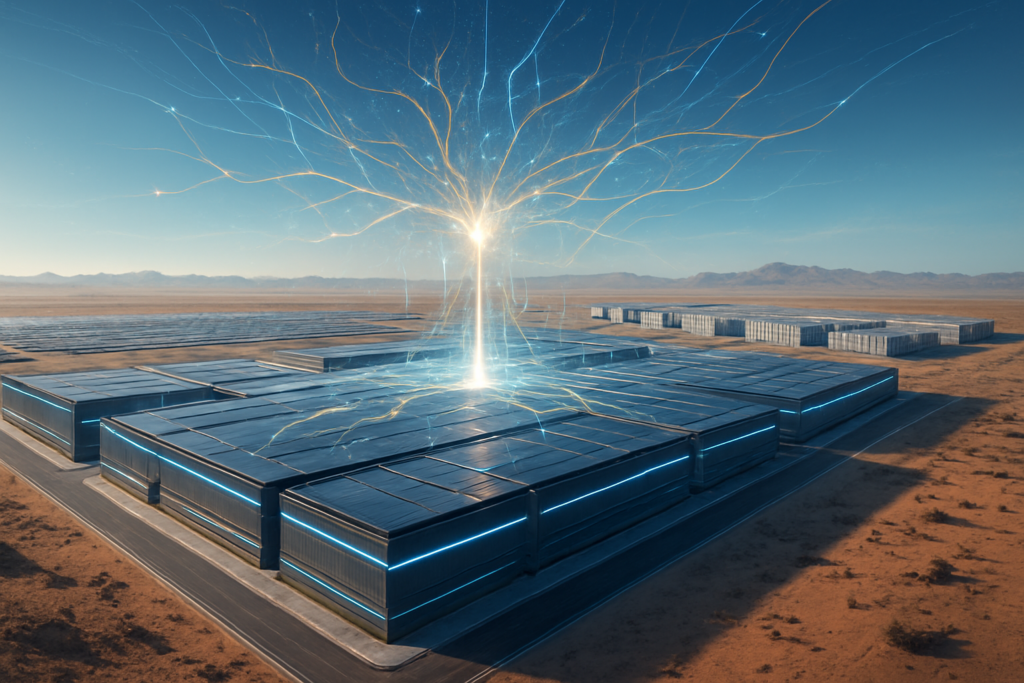
The technical cornerstone of this partnership is a flagship 1.2-gigawatt (GW) data center campus currently under development in Milam County, Texas. To put the scale into perspective, 1.2 GW is enough to power approximately 750,000 homes, making it one of the largest single-site AI installations in the world. Unlike traditional data centers that rely on the existing power grid, the Milam County site will be powered by a dedicated, utility-scale solar array integrated with massive battery storage systems. This "firm capacity" design ensures that the data center can operate 24/7 at peak efficiency, mitigating the intermittency issues typically associated with renewable energy.
SB Energy has significantly bolstered its technical capabilities for this project through the acquisition of Studio 151, a specialized engineering firm that integrates data center design directly into the construction process. This allows the partnership to deploy OpenAI’s proprietary data center architecture, which is optimized for high-density AI training and inference rather than general-purpose cloud computing. Furthermore, the facilities are being designed with advanced water-efficient cooling systems to address the growing environmental concerns regarding the massive water consumption of AI clusters.
Industry experts note that this move represents a departure from the "hyperscaler" model used by companies like Microsoft (NASDAQ: MSFT). While Microsoft has historically provided the cloud infrastructure for OpenAI, this new venture suggests OpenAI is seeking greater autonomy over its physical stack. By designing the hardware environment from the ground up, OpenAI can optimize for the specific thermal and electrical requirements of its future models, potentially achieving efficiency gains that off-the-shelf cloud solutions cannot match.
The strategic implications of this deal are profound, particularly for SoftBank Group Corp (TYO:9984). Under the leadership of Masayoshi Son, SoftBank is transitioning from a venture capital powerhouse into an industrial infrastructure titan. By leveraging SB Energy’s 15 GW development pipeline, SoftBank is positioning itself as the primary landlord and utility provider for the AI revolution. This provides SoftBank with a stable, infrastructure-backed revenue stream while maintaining a central role in the AI ecosystem through its close ties to OpenAI.
For the broader tech landscape, this partnership intensifies the "arms race" for energy. Just days before this announcement, Meta Platforms, Inc. (NASDAQ: META) revealed its own plans for 6 GW of nuclear-powered data centers. The OpenAI-SoftBank alliance confirms that the competitive moat in AI is no longer just about algorithms or data; it is about the ability to secure gigawatts of power. Companies that cannot afford to build their own power plants or secure long-term energy contracts may find themselves priced out of the frontier model market, leading to a further consolidation of power among a few well-capitalized giants.
Startups in the AI space may also see a shift in the landscape. As OpenAI builds out its own infrastructure, it may eventually offer specialized "sovereign" compute capacity to its partners, potentially competing with established cloud providers like Amazon.com, Inc. (NASDAQ: AMZN) and Alphabet Inc. (NASDAQ: GOOGL). The integration of SB Energy also creates a unique feedback loop: SB Energy will use OpenAI’s APIs to optimize its own construction and energy management, essentially using the AI to build the very houses that the AI lives in.
This $1 billion investment is more than just a real estate deal; it is a response to the looming energy crisis threatening the AI industry. As models grow in complexity, the demand for electricity is outstripping the capacity of aging national grids. The OpenAI-SoftBank partnership reflects a broader trend of "grid-independent" computing, where tech companies take on the role of private utilities to ensure their survival. This mirrors previous industrial milestones, such as the early 20th-century steel mills that built their own power plants and rail lines to bypass infrastructure bottlenecks.
However, the scale of these projects has raised concerns among energy analysts and environmental groups. While the use of solar and battery storage is a positive step, the sheer land requirements and the pressure on local supply chains for electrical components are immense. In Texas, where the ERCOT grid has faced stability issues in the past, the addition of 1.2 GW of demand—even if partially self-sustained—will require significant local grid modernization. The partnership has committed to investing in local infrastructure to prevent costs from being passed on to residential ratepayers, a move seen as essential for maintaining public support for these massive developments.
Furthermore, the "Stargate" initiative represents a shift in the geopolitical landscape of AI. By focusing heavily on U.S.-based infrastructure, OpenAI and SoftBank are aligning with national interests to keep the most advanced AI compute within domestic borders. This has significant implications for global AI governance and the "compute divide" between nations that can afford gigawatt-scale infrastructure and those that cannot.
Looking ahead, the Milam County project is expected to be the first of several "gigascale" campuses developed by this partnership. Near-term developments will likely include the announcement of similar sites in other regions with high renewable energy potential, such as the American Southwest and parts of the Midwest. We can also expect to see the integration of more exotic energy sources, such as small modular reactors (SMRs) or geothermal energy, as the partnership seeks to diversify its energy portfolio beyond solar and storage.
The long-term goal is the realization of the full $500 billion Stargate vision. If successful, this infrastructure will provide the foundation for the next decade of AI breakthroughs, including the possible emergence of systems capable of autonomous scientific discovery and complex global problem-solving. However, the path forward is not without challenges. The partnership must navigate a complex web of regulatory hurdles, supply chain constraints for specialized power transformers, and the ongoing debate over the ethical implications of such a massive concentration of technological and energy resources.
Experts predict that the next 24 months will be a "construction era" for AI, where the most significant announcements will come not from research labs, but from construction sites and utility commissions. The success of the OpenAI-SoftBank partnership will be measured not just by the benchmarks of their next model, but by the reliability and efficiency of the power grids they are now building.
The $1 billion partnership between OpenAI and SoftBank marks a historic transition for the AI industry. By moving into the physical realm of energy and infrastructure, these companies are acknowledging that the future of intelligence is inextricably linked to the future of power. The key takeaways from this development are the scale of the commitment—1.2 GW in a single site—and the strategic shift toward vertical integration and energy independence.
In the history of AI, this moment may be remembered as the point where the "digital" and "physical" truly merged. The significance of this development cannot be overstated; it is the infrastructure foundation upon which the next century of technological progress will be built. As OpenAI and SoftBank break ground in Texas, they are not just building a data center; they are building the engine room of the future.
In the coming weeks and months, watch for updates on the Milam County construction timeline and potential follow-up announcements regarding additional sites. Furthermore, keep a close eye on how competitors like Microsoft and Meta respond to this direct challenge to their infrastructure dominance. The race for AI supremacy has moved into the dirt and the steel, and the stakes have never been higher.
This content is intended for informational purposes only and represents analysis of current AI developments.
TokenRing AI delivers enterprise-grade solutions for multi-agent AI workflow orchestration, AI-powered development tools, and seamless remote collaboration platforms.
For more information, visit https://www.tokenring.ai/.