On December 11, 2025, OpenAI shattered the growing industry narrative of a "plateau" in large language models with the surprise release of the GPT-5.2 series, internally codenamed "Garlic." This launch represents the most significant architectural pivot in the company's history, moving away from a single monolithic model toward a tiered ecosystem designed specifically for the high-stakes world of professional knowledge work. The release comes at a critical juncture for the San Francisco-based lab, arriving just weeks after internal reports of a "Code Red" crisis triggered by surging competition from rival labs.
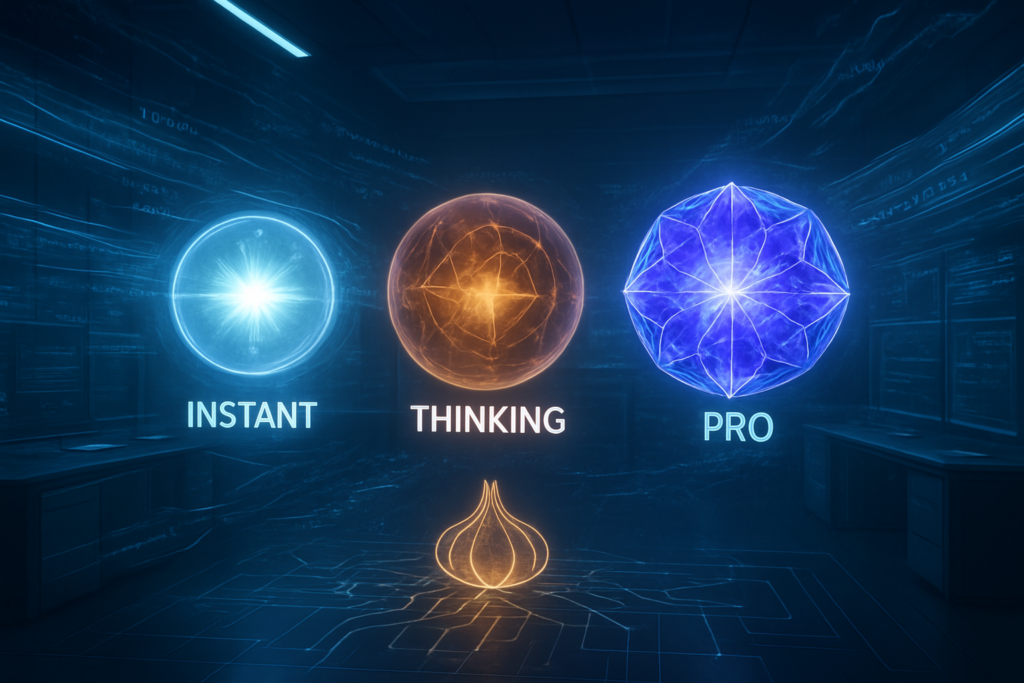
The GPT-5.2 lineup is divided into three distinct iterations: Instant, Thinking, and Pro. While the Instant model focuses on the low-latency needs of daily interactions, it is the Thinking and Pro models that have sent shockwaves through the research community. By integrating advanced reasoning-effort settings that allow the model to "deliberate" before responding, OpenAI has achieved what many thought was years away: a perfect 100% score on the American Invitational Mathematics Examination (AIME) 2025 benchmark. This development signals a shift from AI as a conversational assistant to AI as a verifiable reasoning engine capable of tackling the world's most complex intellectual challenges.
Technical Breakthroughs: The Architecture of Deliberation
The GPT-5.2 series marks a departure from the traditional "next-token prediction" paradigm, leaning heavily into reinforcement learning and "Chain-of-Thought" processing. The Thinking model is specifically engineered to handle "Artifacts"—complex, multi-layered digital objects such as dynamic financial models, interactive software prototypes, and 100-page legal briefs. Unlike its predecessors, GPT-5.2 Thinking can pause its output for several minutes to verify its internal logic, effectively debugging its own reasoning before the user ever sees a result. This "system 2" thinking approach has allowed the model to achieve a 55.6% success rate on the SWE-bench Pro, a benchmark for real-world software engineering that had previously stymied even the most advanced coding assistants.
For those requiring the absolute ceiling of machine intelligence, the GPT-5.2 Pro model offers a "research-grade" experience. Available via a new $200-per-month subscription tier, the Pro version can engage in reasoning tasks for over an hour, processing vast amounts of data to solve high-stakes problems where the margin for error is zero. In technical evaluations, the Pro model reached a historic 54.2% on the ARC-AGI-2 benchmark, crossing the 50% threshold for the first time in history and moving the industry significantly closer to the elusive goal of Artificial General Intelligence (AGI).
This technical leap is further supported by a massive 400,000-token context window, allowing professional users to upload entire codebases or multi-year financial histories for analysis. Initial reactions from the AI research community have been a mix of awe and scrutiny. While many praise the unprecedented reasoning capabilities, some experts have noted that the model's tone has become significantly more formal and "colder" than the GPT-5.1 release, a deliberate choice by OpenAI to prioritize professional utility over social charm.
The 'Code Red' Response: A Shifting Competitive Landscape
The launch of "Garlic" was not merely a scheduled update but a strategic counter-strike. In late 2024 and early 2025, OpenAI faced an existential threat as Alphabet Inc. (NASDAQ: GOOGL) released Gemini 3 Pro and Anthropic (Private) debuted Claude Opus 4.5. Both models had begun to outperform GPT-5.1 in key areas of creative writing and coding, leading to a reported dip in ChatGPT's market share. In response, OpenAI CEO Sam Altman reportedly declared a "Code Red," pausing non-essential projects—including a personal assistant codenamed "Pulse"—to focus the company's entire engineering might on GPT-5.2.
The strategic importance of this release was underscored by the simultaneous announcement of a $1 billion equity investment from The Walt Disney Company (NYSE: DIS). This landmark partnership positions Disney as a primary customer, utilizing GPT-5.2 to orchestrate complex creative workflows and becoming the first major content partner for Sora, OpenAI's video generation tool. This move provides OpenAI with a massive influx of capital and a prestigious enterprise sandbox, while giving Disney a significant technological lead in the entertainment industry.
Other major tech players are already pivoting to integrate the new models. Shopify Inc. (NYSE: SHOP) and Zoom Video Communications, Inc. (NASDAQ: ZM) were announced as early enterprise testers, reporting that the agentic reasoning of GPT-5.2 allows for the automation of multi-step projects that previously required human oversight. For Microsoft Corp. (NASDAQ: MSFT), OpenAI’s primary partner, the success of GPT-5.2 reinforces the value of their multi-billion dollar investment, as these capabilities are expected to be integrated into the next generation of Copilot Pro tools.
Redefining Knowledge Work and the Broader AI Landscape
The most profound impact of GPT-5.2 may be its focus on the "professional knowledge worker." OpenAI introduced a new evaluation metric alongside the launch called GDPval, which measures AI performance across 44 occupations that contribute significantly to the global economy. GPT-5.2 achieved a staggering 70.9% win rate against human experts in these fields, compared to just 38.8% for the original GPT-5. This suggests that the era of AI as a simple "copilot" is evolving into an era of AI as an autonomous "agent" capable of executing end-to-end projects with minimal intervention.
However, this leap in capability brings a new set of concerns. The cost of the Pro tier and the increased API pricing ($1.75 per 1 million input tokens) have raised questions about a growing "intelligence divide," where only the largest corporations and wealthiest individuals can afford the most capable reasoning engines. Furthermore, the model's ability to solve complex mathematical and engineering problems with 100% accuracy raises significant questions about the future of STEM education and the long-term value of human-led technical expertise.
Compared to previous milestones like the launch of GPT-4 in 2023, the GPT-5.2 release feels less like a magic trick and more like a professional tool. It marks the transition of LLMs from being "good at everything" to being "expert at the difficult." The industry is now watching closely to see if the "Garlic" offensive will be enough to maintain OpenAI's lead as Google and Anthropic prepare their own responses for the 2026 cycle.
The Road Ahead: Agentic Workflows and the AGI Horizon
Looking forward, the success of the GPT-5.2 series sets the stage for a 2026 dominated by "agentic workflows." Experts predict that the next 12 months will see a surge in specialized AI agents that use the Thinking and Pro models as their "brains" to navigate the real world—managing supply chains, conducting scientific research, and perhaps even drafting legislation. The ability of GPT-5.2 to use tools independently and verify its own work is the foundational layer for these autonomous systems.
Challenges remain, however, particularly in the realm of energy consumption and the "hallucination of logic." While GPT-5.2 has largely solved fact-based hallucinations, researchers warn that "reasoning hallucinations"—where a model follows a flawed but internally consistent logic path—could still occur in highly novel scenarios. Addressing these edge cases will be the primary focus of the rumored GPT-6 development, which is expected to begin in earnest now that the "Code Red" has subsided.
Conclusion: A New Benchmark for Intelligence
The launch of GPT-5.2 "Garlic" on December 11, 2025, will likely be remembered as the moment OpenAI successfully pivoted from a consumer-facing AI company to an enterprise-grade reasoning powerhouse. By delivering a model that can solve AIME-level math with perfect accuracy and provide deep, deliberative reasoning, they have raised the bar for what is expected of artificial intelligence. The introduction of the Instant, Thinking, and Pro tiers provides a clear roadmap for how AI will be consumed in the future: as a scalable resource tailored to the complexity of the task at hand.
As we move into 2026, the tech industry will be defined by how well companies can integrate these "reasoning engines" into their daily operations. With the backing of giants like Disney and Microsoft, and a clear lead in the reasoning benchmarks, OpenAI has once again claimed the center of the AI stage. Whether this lead is sustainable in the face of rapid innovation from Google and Anthropic remains to be seen, but for now, the "Garlic" offensive has successfully changed the conversation from "Can AI think?" to "How much are you willing to pay for it to think for you?"
This content is intended for informational purposes only and represents analysis of current AI developments.
TokenRing AI delivers enterprise-grade solutions for multi-agent AI workflow orchestration, AI-powered development tools, and seamless remote collaboration platforms.
For more information, visit https://www.tokenring.ai/.