In a move that fundamentally redefines the relationship between Big Tech and the energy sector, Alphabet Inc. (NASDAQ: GOOGL) announced on December 22, 2025, that it has completed the $4.75 billion acquisition of Intersect Power, a leading developer of utility-scale renewable energy and integrated data center infrastructure. The deal, which includes a massive pipeline of solar, wind, and battery storage projects, marks the first time a major hyperscaler has moved beyond purchasing renewable energy credits to directly owning the generation and transmission assets required to power its global AI operations.
The acquisition comes at a critical juncture for Google as it races to deploy its next generation of AI supercomputers. With the energy demands of large language models (LLMs) like Gemini scaling exponentially, the "power wall"—the physical limit of electricity available from traditional utility grids—has become the single greatest bottleneck in the AI arms race. By absorbing Intersect Power’s development platform and its specialized "co-location" strategy, Google is effectively bypassing the years-long backlogs of the public electrical grid to build self-sufficient, energy-integrated AI factories.
The Technical Shift: From Grid-Dependent to Energy-Integrated
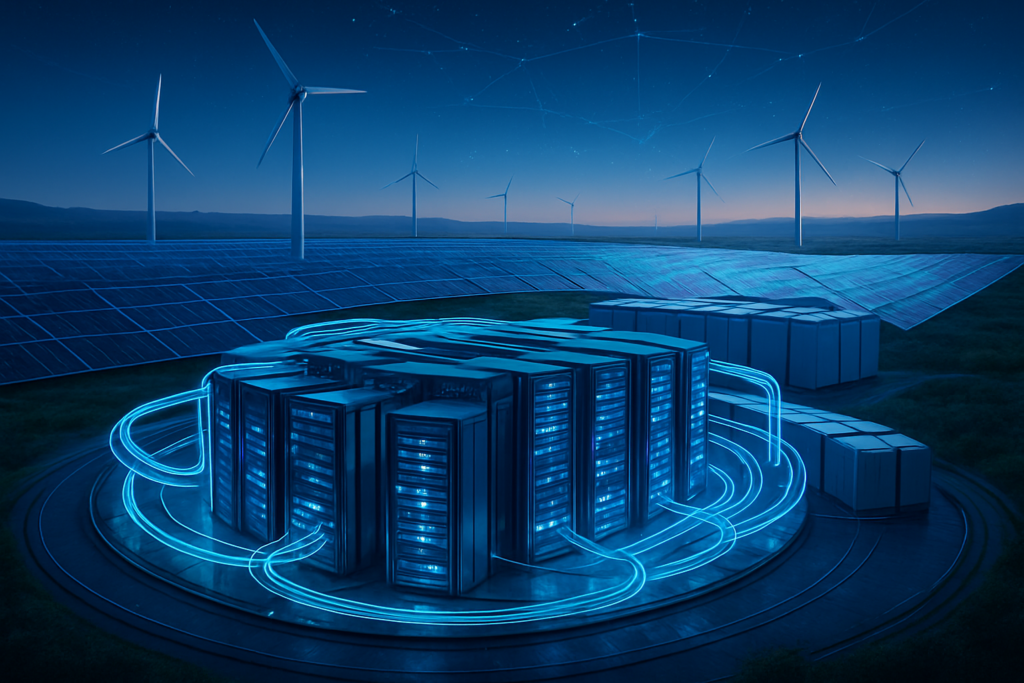
At the heart of this acquisition is Intersect Power’s pioneering "Quantum" infrastructure model. Unlike traditional data centers that rely on the local utility for power, Intersect specializes in co-locating massive compute clusters directly alongside dedicated renewable energy plants. Their flagship project in Haskell County, Texas, serves as the blueprint: an 840 MW solar PV installation paired with 1.3 GWh of battery energy storage utilizing Tesla (NASDAQ: TSLA) Megapacks. This "behind-the-meter" approach allows Google to feed its servers directly from its own power source, drastically reducing transmission losses and avoiding the grid congestion that has delayed other tech projects by up to five years.
This infrastructure is designed specifically to support Google’s 7th-generation custom AI silicon, codenamed "Ironwood." The Ironwood TPU (Tensor Processing Unit) represents a massive leap in compute density; a single liquid-cooled "superpod" now scales to 9,216 chips, delivering a staggering 42.5 Exaflops of AI performance. However, these capabilities come with a heavy price in wattage. A single Ironwood superpod can consume nearly 10 MW of power—enough to fuel thousands of homes. Intersect’s technology manages this load through advanced "Dynamic Thermal Management" software, which synchronizes the compute workload of the TPUs with the real-time output of the solar and battery arrays.
Initial reactions from the AI research community have been overwhelmingly positive regarding the sustainability implications. Experts at the Clean Energy Institute noted that while Google’s total energy consumption rose by 27% in 2024, the move to own the "full stack" of energy production allows for a level of carbon-free energy (CFE) matching that was previously impossible. By utilizing First Solar (NASDAQ: FSLR) thin-film technology and long-duration storage, Google can maintain 24/7 "firm" power for its AI training runs without resorting to fossil-fuel-heavy baseload power from the public grid.
Competitive Implications: The Battle for Sovereignty
This acquisition signals a divergence in strategy among the "Big Three" cloud providers. While Microsoft (NASDAQ: MSFT) has doubled down on nuclear energy—most notably through its partnership with Constellation Energy (NASDAQ: CEG) to restart the Three Mile Island reactor—and Amazon (NASDAQ: AMZN) has pursued similar nuclear deals for its AWS division, Google is betting on a more diversified, modular approach. By owning a developer like Intersect, Google gains the agility to site data centers in regions where nuclear is not viable but solar and wind are abundant.
The strategic advantage here is "speed-to-market." In the current landscape, the time it takes to secure a high-voltage grid connection is often longer than the time it takes to build the data center itself. By controlling the land, the permits, and the generation assets through Intersect, Google can potentially bring new AI clusters online 18 to 24 months faster than competitors who remain at the mercy of traditional utility timelines. This "energy sovereignty" could prove decisive in the race to achieve Artificial General Intelligence (AGI), where the first company to scale its compute to the next order of magnitude gains a compounding lead.
Furthermore, this move disrupts the traditional Power Purchase Agreement (PPA) market. For years, tech giants used PPAs to claim they were "100% renewable" by buying credits from distant wind farms. However, the Intersect deal proves that the industry has realized PPAs are no longer sufficient to guarantee the physical delivery of electrons to power-hungry AI chips. Google’s competitors may now feel forced to follow suit, potentially leading to a wave of acquisitions of independent power producers (IPPs) by other tech giants, further consolidating the energy and technology sectors.
The Broader AI Landscape: Breaking the Power Wall
The Google-Intersect deal is a landmark event in what historians may later call the "Great Energy Pivot" of the 2020s. As AI models move from the training phase to the mass-inference phase—where billions of users interact with AI daily—the total energy footprint of the internet is expected to double. This acquisition addresses the "Power Wall" head-on, suggesting that the future of AI is not just about smarter algorithms, but about more efficient physical infrastructure. It mirrors the early days of the industrial revolution, when factories were built next to rivers for water power; today’s "AI mills" are being built next to solar and wind farms.
However, the move is not without its concerns. Community advocates and some energy regulators have raised questions about the "cannibalization" of renewable resources. There is a fear that if Big Tech buys up the best sites for renewable energy and uses the power exclusively for AI, it could drive up electricity prices for residential consumers and slow the decarbonization of the public grid. Google has countered this by emphasizing that Intersect Power focuses on "additionality"—building new capacity that would not have existed otherwise—but the tension between corporate AI needs and public infrastructure remains a significant policy challenge.
Comparatively, this milestone is as significant as Google’s early decision to design its own servers and TPUs. Just as Google realized it could not rely on off-the-shelf hardware to achieve its goals, it has now realized it cannot rely on the legacy energy grid. This vertical integration—from the sun to the silicon to the software—represents the most sophisticated industrial strategy ever seen in the technology sector.
Future Horizons: Geothermal, Fusion, and Beyond
Looking ahead, the Intersect acquisition is expected to serve as a laboratory for "next-generation" energy technologies. Google has already indicated that Intersect will lead its exploration into advanced geothermal energy, which provides the elusive "holy grail" of clean energy: carbon-free baseload power that runs 24/7. Near-term developments will likely include the deployment of iron-air batteries, which can store energy for several days, providing a safety net for AI training runs during periods of low sun or wind.
In the long term, experts predict that Google may use Intersect’s infrastructure to experiment with small modular reactors (SMRs) or even fusion energy as those technologies mature. The goal is a completely "closed-loop" data center that operates entirely independently of the global energy market. Such a system would be immune to energy price volatility, providing Google with a massive cost advantage in the inference market, where the cost-per-query will be the primary metric of success for products like Gemini and Search.
The immediate challenge will be the integration of two very different corporate cultures: the "move fast and break things" world of AI software and the highly regulated, capital-intensive world of utility-scale energy development. If Google can successfully bridge this gap, it will set a new standard for how technology companies operate in the 21st century.
Summary and Final Thoughts
The $4.75 billion acquisition of Intersect Power is more than just a capital expenditure; it is a declaration of intent. By securing its own power and cooling infrastructure, Google has fortified its position against the physical constraints that threaten to slow the progress of AI. The deal ensures that the next generation of "Ironwood" supercomputers will have the reliable, clean energy they need to push the boundaries of machine intelligence.
Key Takeaways:
- Direct Ownership: Google is moving from buying energy credits to owning the power plants.
- Co-location Strategy: Building AI clusters directly next to renewable sources to bypass grid delays.
- Vertical Integration: Control over the entire stack, from energy generation to custom AI silicon (TPUs).
- Competitive Edge: A "speed-to-market" advantage over Microsoft and Amazon in the race for compute scale.
As we move into 2026, the industry will be watching closely to see how quickly Google can operationalize Intersect’s pipeline. The success of this move could trigger a fundamental restructuring of the global energy market, as the world’s most powerful companies become its most significant energy producers. For now, Google has effectively "plugged in" its AI future, ensuring that the lights stay on for the next era of innovation.
This content is intended for informational purposes only and represents analysis of current AI developments.
TokenRing AI delivers enterprise-grade solutions for multi-agent AI workflow orchestration, AI-powered development tools, and seamless remote collaboration platforms.
For more information, visit https://www.tokenring.ai/.