In a move that fundamentally reshapes the architecture of artificial intelligence applications, Google (NASDAQ: GOOGL) has officially launched its Interactions API in public beta. Released in mid-December 2025, this new infrastructure marks a decisive departure from the traditional "stateless" nature of large language models. By providing developers with a unified gateway to the Gemini 3 Pro model and the specialized Deep Research agent, Google is attempting to standardize how autonomous agents maintain context, reason through complex problems, and execute long-running tasks without constant client-side supervision.
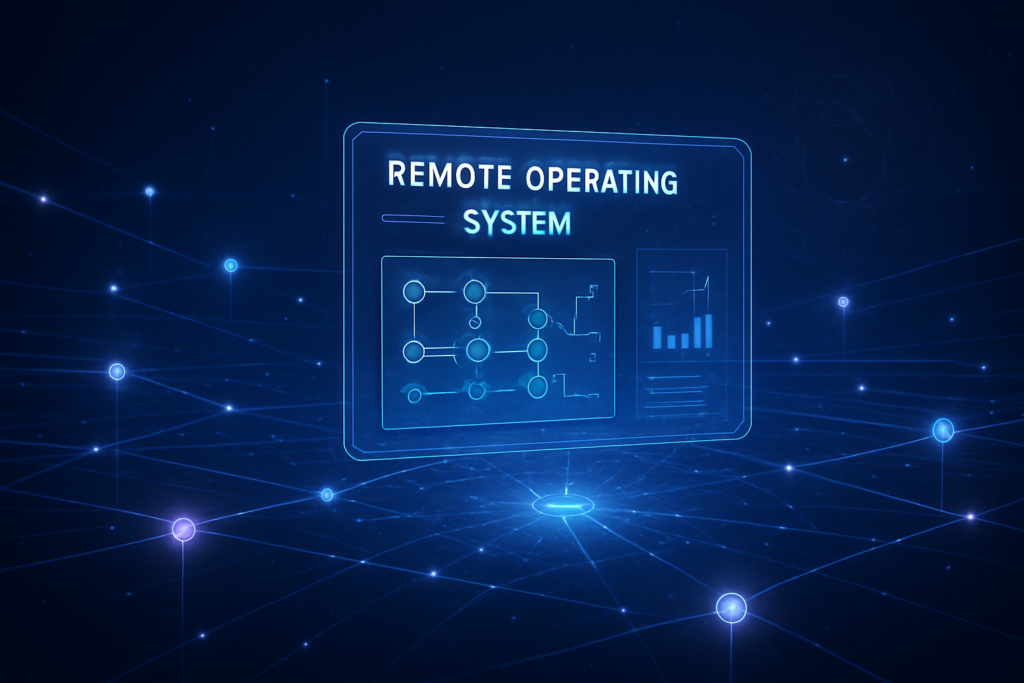
The immediate significance of the Interactions API lies in its ability to handle the "heavy lifting" of agentic workflows on the server side. Historically, developers were forced to manually manage conversation histories and tool-call states, often leading to "context bloat" and fragile implementations. With this launch, Google is positioning its AI infrastructure as a "Remote Operating System," where the state of an agent is preserved in the cloud, allowing for background execution that can span hours—or even days—of autonomous research and problem-solving.
Technical Foundations: From Completion to Interaction
At the heart of this announcement is the new /interactions endpoint, which is designed to replace the aging generateContent paradigm. Unlike its predecessors, the Interactions API is inherently stateful. When a developer initiates a session, Google’s servers assign a previous_interaction_id, effectively creating a persistent memory for the agent. This allows the model to "remember" previous tool outputs, reasoning chains, and user preferences without the developer having to re-upload the entire conversation history with every new prompt. This technical shift significantly reduces latency and token costs for complex, multi-turn dialogues.
One of the most talked-about features is the Background Execution capability. By passing a background=true parameter, developers can trigger agents to perform "long-horizon" tasks. For instance, the integrated Deep Research agent—specifically the deep-research-pro-preview-12-2025 model—can be tasked with synthesizing a 50-page market analysis. The API immediately returns a session ID, allowing the client to disconnect while the agent autonomously browses the web, queries databases via the Model Context Protocol (MCP), and refines its findings. This mirrors how human employees work: you give them a task, they go away to perform it, and they report back when finished.
Initial reactions from the AI research community have been largely positive, particularly regarding Google’s commitment to transparency. Unlike OpenAI’s Responses API, which uses "compaction" to hide reasoning steps for the sake of efficiency, Google’s Interactions API keeps the full reasoning chain—the model’s "thoughts"—available for developer inspection. This "glass-box" approach is seen as a critical tool for debugging the non-deterministic behavior of autonomous agents.
Reshaping the Competitive Landscape
The launch of the Interactions API is a direct shot across the bow of competitors like OpenAI and Anthropic. By integrating the Deep Research agent directly into the API, Google is commoditizing high-level cognitive labor. Startups that previously spent months building custom "wrapper" logic to handle research tasks now find that functionality available as a single API call. This move likely puts pressure on specialized AI research startups, forcing them to pivot toward niche vertical expertise rather than general-purpose research capabilities.
For enterprise tech giants, the strategic advantage lies in the Agent2Agent (A2A) protocol integration. Google is positioning the Interactions API as the foundational layer for a multi-agent ecosystem where different specialized agents—some built by Google, some by third parties—can seamlessly hand off tasks to one another. This ecosystem play leverages Google’s massive Cloud infrastructure, making it difficult for smaller players to compete on the sheer scale of background processing and data persistence.
However, the shift to server-side state management is not without its detractors. Some industry analysts at firms like Novalogiq have pointed out that Google’s 55-day data retention policy for paid tiers could create hurdles for industries with strict data residency requirements, such as healthcare and defense. While Google offers a "no-store" option, using it strips away the very stateful benefits that make the Interactions API compelling, creating a strategic tension between functionality and privacy.
The Wider Significance: The Agentic Revolution
The Interactions API is more than just a new set of tools; it is a milestone in the "agentic revolution" of 2025. We are moving away from AI as a chatbot and toward AI as a teammate. The release of the DeepSearchQA benchmark alongside the API underscores this shift. By scoring 66.1% on tasks that require "causal chain" reasoning—where each step depends on the successful completion of the last—Google has demonstrated that its agents are moving past simple pattern matching toward genuine multi-step problem solving.
This development also highlights the growing importance of standardized protocols like the Model Context Protocol (MCP). By building native support for MCP into the Interactions API, Google is acknowledging that an agent is only as good as the tools it can access. This move toward interoperability suggests a future where AI agents aren't siloed within single platforms but can navigate a web of interconnected databases and services to fulfill their objectives.
Comparatively, this milestone feels similar to the transition from static web pages to the dynamic, stateful web of the early 2000s. Just as AJAX and server-side sessions enabled the modern social media and e-commerce era, stateful AI APIs are likely to enable a new class of "autonomous-first" applications that we are only beginning to imagine.
Future Horizons and Challenges
Looking ahead, the next logical step for the Interactions API is the expansion of its "memory" capabilities. While 55 days of retention is a start, true personal or corporate AI assistants will eventually require "infinite" or "long-term" memory that can span years of interaction. Experts predict that Google will soon introduce a "Vectorized State" feature, allowing agents to query an indexed history of all past interactions to provide even deeper personalization.
Another area of rapid development will be the refinement of the A2A protocol. As more developers adopt the Interactions API, we will likely see the emergence of "Agent Marketplaces" where specialized agents can be "hired" via API to perform specific sub-tasks within a larger workflow. The challenge, however, remains reliability. As the DeepSearchQA scores show, even the best models still fail nearly a third of the time on complex tasks. Reducing this "hallucination gap" in multi-step reasoning remains the "Holy Grail" for Google’s engineering teams.
Conclusion: A New Standard for AI Development
Google’s launch of the Interactions API in December 2025 represents a significant leap forward in AI infrastructure. By centralizing state management, enabling background execution, and providing unified access to the Gemini 3 Pro and Deep Research models, Google has set a new standard for what an AI development platform should look like. The shift from stateless prompts to stateful, autonomous "interactions" is not merely a technical upgrade; it is a fundamental change in how we interact with and build upon artificial intelligence.
In the coming months, the industry will be watching closely to see how developers leverage these new background execution capabilities. Will we see the birth of the first truly autonomous "AI companies" run by a skeleton crew of humans and a fleet of stateful agents? Only time will tell, but with the Interactions API, the tools to build that future are now in the hands of the public.
This content is intended for informational purposes only and represents analysis of current AI developments.
TokenRing AI delivers enterprise-grade solutions for multi-agent AI workflow orchestration, AI-powered development tools, and seamless remote collaboration platforms.
For more information, visit https://www.tokenring.ai/.