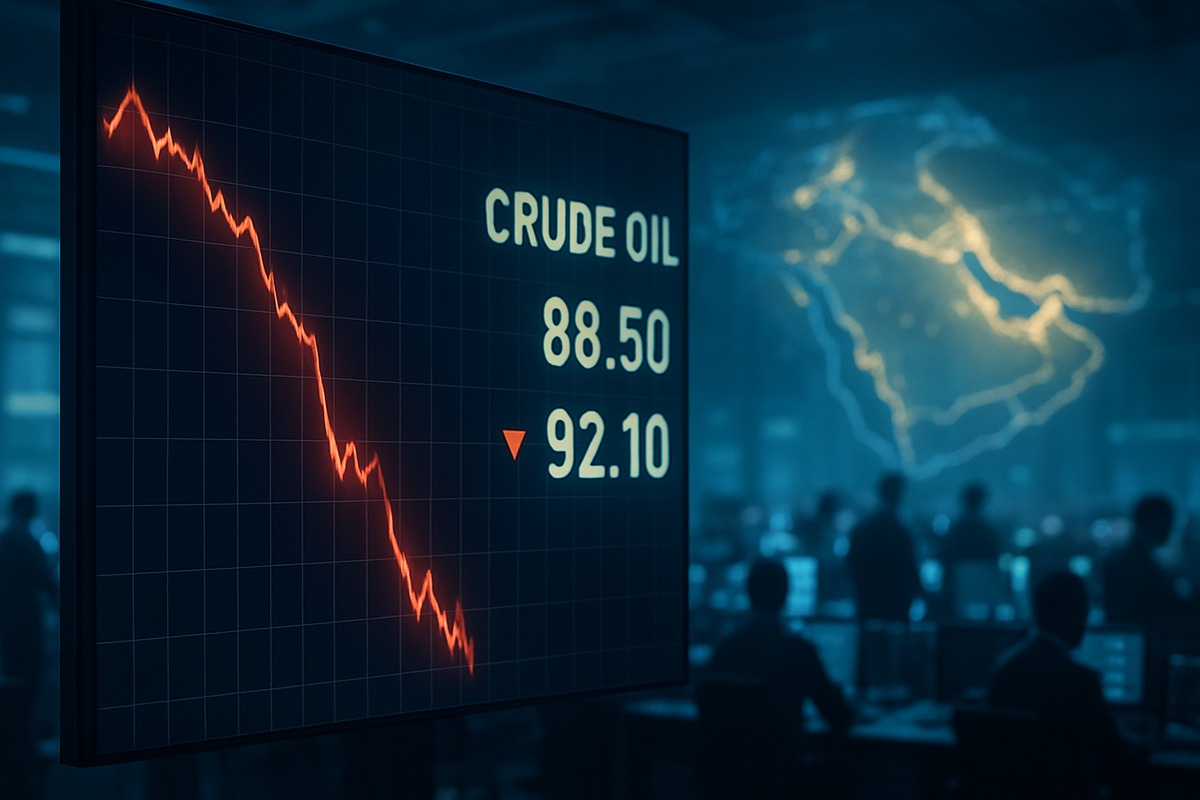
Global energy markets experienced a historic correction on March 10, 2026, as crude oil prices plummeted from recent multi-year highs. Benchmark West Texas Intermediate (WTI) fell sharply to settle between $88 and $89 per barrel, while Brent crude, the international standard, dropped to $92. The sudden retreat marks a significant reversal from earlier in the week, when fears of a total energy blockade in the Persian Gulf propelled prices toward a staggering $120 per barrel.
The aggressive sell-off followed a series of unexpected diplomatic signals suggesting a de-escalation in the Middle East conflict. After a week of heightened military posturing that threatened the closure of the Strait of Hormuz, reports of a brokered "off-ramp" involving a transitional authority in Tehran and international mediators provided the relief the market desperately sought. This pivot has immediate implications for global inflation forecasts, offering a reprieve to central banks that were bracing for a sustained energy-driven price shock.
The Week the Spigots Almost Closed
The volatility of early March 2026 will likely be remembered as the "Hormuz Shock." Following the military escalations of late February—notably the joint operations targeting regional infrastructure—oil prices surged as the Strait of Hormuz, a conduit for 20% of the world’s petroleum, saw restricted traffic. On March 1, the market reacted with panic, sending Brent crude above $115 as analysts warned of a protracted "super-spike." However, the peak was short-lived. By the morning of March 10, news emerged that a diplomatic delegation led by neutral regional powers had secured a commitment to keep shipping lanes open, effectively draining the "war premium" from the price of a barrel.
The timeline leading to this moment was fraught with uncertainty. Just 72 hours ago, major trading desks were pricing in a $150-per-barrel scenario. The shift began late Monday evening when the United Nations and key regional stakeholders announced a "Memorandum of Maritime Stability." This agreement, coupled with signals from major producers like Saudi Aramco (TADAWUL:2222) that they would leverage their spare capacity to stabilize the market, triggered an algorithmic selling spree that didn't stop until the benchmarks hit their three-month lows.
Corporate Fallout: Winners and Losers in a Volatile Tape
The 25% drop in crude prices has created a stark divide in the equity markets. For the integrated oil giants, the day brought a swift end to a period of "windfall" sentiment. ExxonMobil (NYSE: XOM) and Chevron (NYSE: CVX) both saw their shares retreat in early trading as investors reassessed the longevity of $100+ oil. While these companies remain highly profitable at $88 per barrel, the rapid cooling of the market has led analysts to revise downward the aggressive share buyback programs that were anticipated during the height of the crisis. Similarly, European majors like Shell (NYSE: SHEL) and BP (NYSE: BP) faced selling pressure, particularly as the geopolitical risk premium—which had been propping up their valuation—evaporated.
Conversely, the "losers" of high oil prices are today's clear winners. The airline sector, which has been battered by soaring fuel surcharges, saw a massive relief rally. Delta Air Lines (NYSE: DAL), United Airlines (NASDAQ: UAL), and American Airlines (NASDAQ: AAL) all posted gains exceeding 6% as the prospect of lower jet fuel costs improved their margin outlook for the busy 2026 summer travel season. Logistics and transport firms, including United Parcel Service (NYSE: UPS), also benefited, as lower diesel prices are expected to alleviate the pressure on their ground operations, potentially slowing the pace of shipping rate hikes for consumers.
A Wider Lens on Geopolitics and Energy Security
This event underscores a broader shift in how the global economy views energy security in the mid-2020s. The rapid escalation and subsequent de-escalation suggest that while the world remains sensitive to Middle Eastern stability, the "geopolitical floor" for oil prices is more fragile than previously thought. Unlike the 1973 oil embargo or the price shocks of 2022, the 2026 "Hormuz Shock" was met with a more coordinated diplomatic response and a faster mobilization of alternative supply signals. It highlights a maturing market that, while still prone to spikes, has developed more robust mechanisms to handle short-term supply threats.
Furthermore, the price drop complicates the ongoing debate over the energy transition. Sustained $120 oil was seen by many as a catalyst for a faster shift toward electrification; however, a return to the sub-$90 range might dampen the immediate urgency for some corporate fleets to move away from internal combustion engines. This "price yo-yo" creates a challenging environment for policymakers who are trying to balance immediate economic relief with long-term climate goals. The historical precedent of the mid-2010s oil glut looms large, as market participants wonder if this is a temporary dip or the start of a more sustained bearish trend.
Navigating the Post-Crisis Landscape
In the short term, market volatility is expected to remain elevated. Traders will be looking for concrete evidence that the diplomatic signals translate into actual physical barrel movements. Any breakdown in the "Memorandum of Maritime Stability" could just as easily send prices back above $100. Strategically, companies in the energy-intensive manufacturing sector may use this dip to lock in long-term fuel hedges, protecting themselves against the next inevitable geopolitical flare-up.
Looking further ahead, the focus will shift to OPEC+ and their upcoming ministerial meeting. With the "war premium" gone, the cartel faces the familiar challenge of managing production levels to prevent an oversupply. If the diplomatic breakthrough leads to a permanent reopening of sanctioned or disrupted routes, the market could face a surplus by the fourth quarter of 2026. This scenario would present a significant opportunity for the automotive and industrial sectors but could force another round of capital expenditure cuts for exploration and production firms.
Conclusion: The New Normal of 2026
The events of March 10, 2026, serve as a potent reminder of the oil market's inherent volatility. The swift decline from $120 to $88 per barrel reflects a market that is hyper-reactive to diplomatic news and increasingly skeptical of long-term supply disruptions. The key takeaway for investors is that while geopolitical risk can drive prices in the short term, the fundamental laws of supply, demand, and diplomatic necessity eventually prevail.
Moving forward, the market will likely trade in a range-bound fashion as it waits for the dust to settle in the Middle East. Investors should keep a close eye on satellite data tracking tanker movements through the Strait of Hormuz and any official statements from the "Board of Peace" regarding regional reconstruction. While the immediate threat of an energy crisis appears to have been averted, the underlying tensions remain. For the rest of 2026, the watchword will be "cautious optimism," as the world navigates the delicate balance between energy security and global stability.
This content is intended for informational purposes only and is not financial advice.