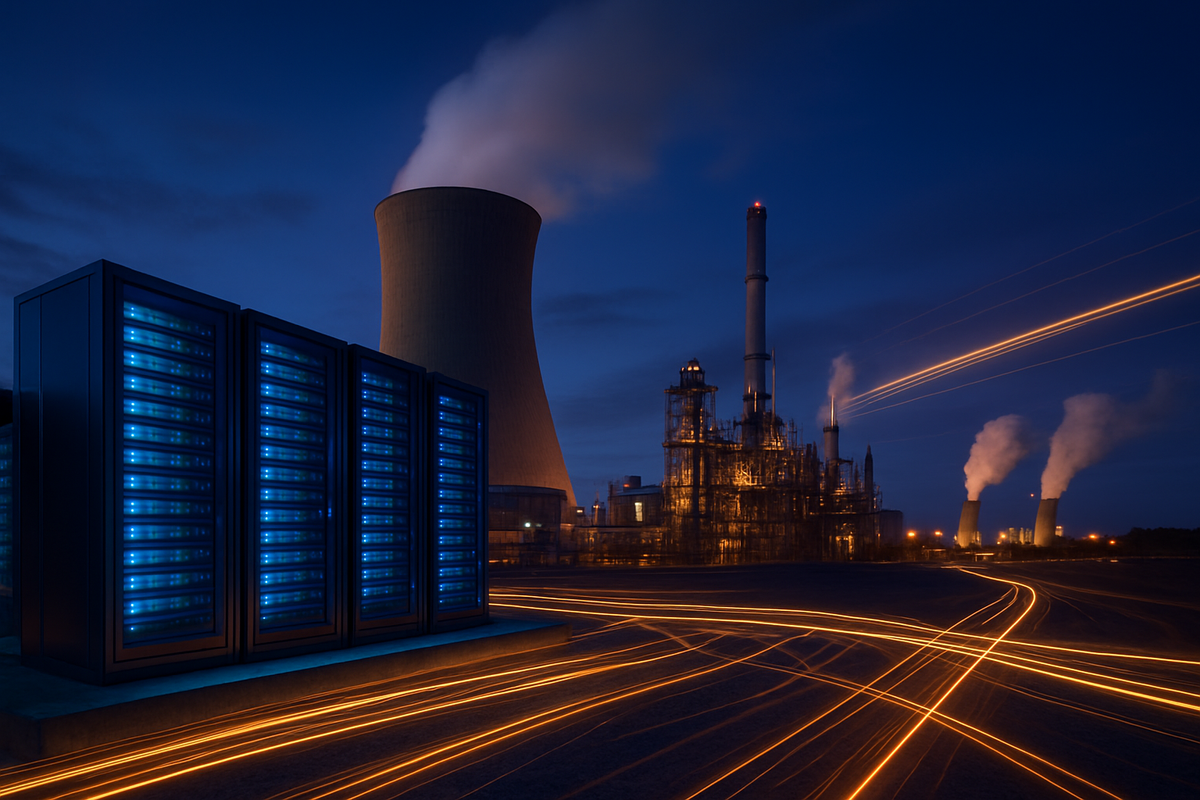
In a move that fundamentally reshapes the American power landscape, Constellation Energy (NASDAQ: CEG) has officially completed its landmark $16.4 billion acquisition of Calpine Corporation. The deal, which finalized on January 7, 2026, creates a clean energy titan with an unprecedented 60-gigawatt (GW) generation capacity. By merging the nation’s largest nuclear fleet with Calpine’s premier natural gas and geothermal assets, Constellation has positioned itself as the indispensable partner for "hyperscale" technology companies currently locked in an arms race to power the next generation of artificial intelligence.
The immediate implications of this merger are already being felt across the financial markets. With the integration of Calpine’s flexible generation fleet, Constellation is forecasting a massive 20% boost to its 2026 earnings per share (EPS). This strategic pivot allows the company to offer what Big Tech craves most: 24/7 "firm" power that combines the carbon-free reliability of nuclear energy with the rapid-response capabilities of natural gas, ensuring that massive AI data centers remain online even during periods of peak grid stress.
A Massive Scalpel in the AI Power Supercycle
The road to this merger began on January 10, 2025, when Constellation Energy (NASDAQ: CEG) first announced its intent to acquire the privately-held Calpine from a consortium led by Energy Capital Partners (ECP). The transaction was valued at a $16.4 billion equity price—comprised of $4.5 billion in cash and 50 million shares of CEG stock—bringing the total enterprise value to approximately $26.6 billion when including Calpine’s debt. Over the last fourteen months, the companies navigated a complex regulatory environment, eventually securing approval from the Department of Justice (DOJ) and the Federal Energy Regulatory Commission (FERC) after agreeing to divest several power plants in the PJM Interconnection region to maintain competitive market balance.
The combined 60 GW platform is a diverse powerhouse. Constellation contributes its industry-leading 32.4 GW nuclear fleet, which provides the carbon-free "baseload" essential for corporate sustainability goals. Calpine brings roughly 26 GW of modern natural gas capacity and the crown jewel of geothermal energy: "The Geysers" in California, the largest geothermal complex in the world. This synergy was highlighted by Constellation CEO Joe Dominguez, who described the merger as the creation of a "one-stop shop" for the global data economy. Shortly after the closing, the company announced a 380 MW power agreement to serve a new CyrusOne data center in Texas, signaling the rapid pace at which this new capacity is being monetized.
Market Winners and Shifting Competitive Tides
The clear winner in this transaction is Constellation Energy (NASDAQ: CEG), whose shares have surged nearly 20% since the deal's inception, trading at approximately $323 as of March 2026. Analysts expect the deal to add more than $2 billion in annual free cash flow, supporting a double-digit dividend growth target that has made the stock a favorite for both growth and income investors. Energy Capital Partners also emerges as a significant victor, retaining a massive stake in the combined entity and betting on the long-term appreciation of the "energy-AI nexus."
However, the merger places intense pressure on competitors like Vistra Corp (NYSE: VST) and Public Service Enterprise Group (NYSE: PEG). These firms must now contend with a rival that has significantly more scale and a more diverse geographical footprint. While Vistra has followed a similar path by expanding its nuclear and gas portfolio, it now trails Constellation in total capacity and balance sheet flexibility. Meanwhile, traditional renewable giants like NextEra Energy (NYSE: NEE) face a new challenge: convincing data center operators that intermittent wind and solar can compete with the 24/7 reliability of Constellation’s nuclear-gas hybrid model.
Redefining Reliability in the Age of Silicon
This acquisition fits into a broader industry trend where electricity is no longer viewed as a simple commodity, but as a critical infrastructure bottleneck for the digital age. As Microsoft (NASDAQ: MSFT), Meta (NASDAQ: META), and Alphabet (NASDAQ: GOOGL) continue to pour billions into AI infrastructure, the demand for "firm" carbon-free power has outpaced the development of traditional renewables. The Constellation-Calpine merger is a direct response to this "AI power supercycle," proving that existing nuclear and high-efficiency gas assets are more valuable today than they were a decade ago.
Historically, this deal draws comparisons to the massive utility consolidations of the early 2000s, but with a modern twist. Rather than focusing on residential rate-payer growth, this merger is aimed squarely at the high-margin commercial and industrial (C&I) sector. Regulatory scrutiny was intense, particularly regarding market power in the mid-Atlantic, but the outcome suggests that federal regulators are increasingly willing to permit large-scale mergers if they facilitate the rapid expansion of energy infrastructure needed for national technological leadership.
The Horizon: Dividends, Data Centers, and Diversification
Looking ahead, the short-term focus for Constellation will be the seamless integration of Calpine’s 2,300 employees and its complex fleet of over 60 power plants. Investors should expect a series of "co-location" announcements throughout 2026, where data centers are built directly adjacent to Constellation’s power plants to avoid grid congestion and interconnection delays. The company’s projected EPS jump to over $11.00 per share by year-end appears well within reach, provided natural gas prices remain relatively stable and the AI demand curve continues its upward trajectory.
In the long term, the addition of Calpine’s geothermal assets provides Constellation with a "green" baseload alternative that could be expanded through enhanced geothermal systems (EGS). This gives the company a hedge against future carbon regulations that might target even the most efficient natural gas plants. The strategic challenge will be managing the public and political perception of its fossil fuel assets as the company continues to market itself as a leader in the clean energy transition.
Conclusion and Investor Outlook
The Constellation-Calpine merger is a defining moment for the 2026 energy market. It has successfully created a "Clean Energy Titan" capable of meeting the gargantuan power needs of the AI revolution while delivering significant financial returns to its shareholders. The key takeaways for investors are the massive 20% earnings accretion, the dominance in the data center power market, and the diversification into high-value geothermal energy.
Moving forward, the market will be watching for the successful realization of synergy targets and the pace of new data center contracts. As the "AI power supercycle" continues, Constellation Energy (NASDAQ: CEG) has not only secured its position at the top of the food chain but has also set a new standard for how energy companies must evolve to power the future of computing. Investors should keep a close eye on the company’s quarterly updates for progress on its dividend growth and any further strategic divestitures required by regulators.
This content is intended for informational purposes only and is not financial advice.