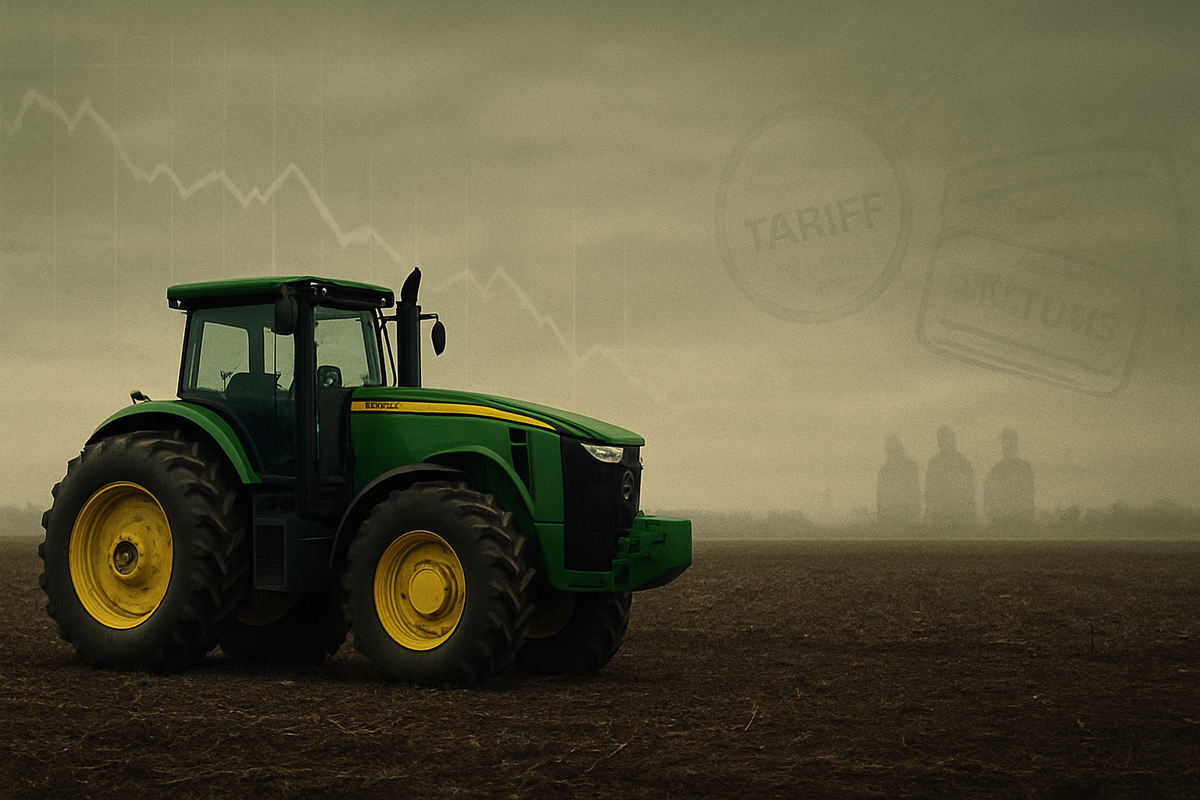
In a significant move reflecting the tightening grip of global economic pressures, agricultural and construction equipment giant Deere & Company (NYSE: DE), commonly known as John Deere, announced a wage freeze for its salaried employees, including executives, for the upcoming fiscal year 2026. The decision, revealed on December 11, 2025, underscores the profound impact that volatile commodity markets and persistent international tariffs are having on even the most established manufacturing titans and their workforce.
The immediate implication of this freeze is a halt in pay raises for a substantial portion of John Deere's white-collar workforce. While hourly employees covered by existing union contracts remain unaffected, the measure signals a proactive, albeit challenging, step by the company to mitigate financial headwinds stemming from depressed agricultural commodity prices and elevated raw material costs exacerbated by ongoing trade disputes.
Detailed Coverage: Navigating a Storm of Economic Pressures
The wage freeze at John Deere is a direct response to a confluence of challenging economic factors that have been steadily eroding the company's profitability and market outlook. Primarily, the company cited persistently low agricultural commodity prices, which have severely impacted the financial health of farmers globally. With reduced profits, farmers are less inclined and often unable to invest in new, expensive agricultural machinery, directly translating to diminished demand for John Deere's core products.
Compounding this challenge are the lingering effects of international tariffs. John Deere has explicitly highlighted the significant financial burden imposed by tariffs on critical raw materials such as steel and aluminum, as well as broader trade tariffs impacting regions like India and the European Union. The company had previously projected a staggering $600 million in pre-tax damage from tariffs for the current fiscal year, an increase from an earlier forecast of $500 million. These tariffs inflate the cost of manufacturing equipment, forcing John Deere to either absorb higher costs or pass them on to already struggling customers, further dampening sales. The timeline for this decision saw the announcement on December 11, 2025, indicating an immediate implementation for the fiscal year 2026.
Key stakeholders in this development include John Deere's executive leadership, who made the decision, and its salaried workforce who will experience the freeze. Notably, the United Automobile, Aerospace and Agricultural Implement Workers (UAW) union, representing many of John Deere's hourly workers, is not directly impacted by this specific freeze due to existing contractual agreements. However, this move follows a period of significant labor relations for John Deere, including a major strike by over 10,000 UAW members in late 2021, which ultimately resulted in a new six-year contract providing substantial wage increases and benefits for hourly employees. This historical context highlights the different dynamics at play for various segments of the company's workforce. The company's initial reaction has been to frame the decision as a necessary measure for financial prudence in a difficult market, following previous cost-cutting initiatives such as layoffs and voluntary separation programs for salaried staff in 2020 and 2024.
Ripple Effects: Who Wins and Who Loses in a Challenging Agricultural Market
The economic headwinds forcing John Deere (NYSE: DE) to implement a wage freeze are creating a distinct landscape of winners and losers across the agricultural and industrial sectors. Companies whose fortunes are tied to farmer spending and global trade dynamics are feeling the most direct impact, while others may find unexpected opportunities.
The most immediate "losers" are undoubtedly John Deere's direct competitors in the agricultural equipment manufacturing space. Firms such as AGCO Corporation (NYSE: AGCO), CNH Industrial N.V. (NYSE: CNHI), and Japan's Kubota Corporation (OTCPK: KUBTY) are all grappling with the same reduced demand from farmers facing squeezed profits due to low commodity prices. Like John Deere, these companies also face increased production costs from tariffs on imported raw materials and components, further eroding their profit margins. Even diversified industrial giants like Caterpillar Inc. (NYSE: CAT), with its significant agricultural machinery division, will likely see a downturn in this segment. The entire sector is experiencing a deferral of capital expenditure by farmers, leading to slower sales and increased inventory.
Beyond equipment manufacturers, providers of agricultural inputs are also taking a substantial hit. Companies specializing in fertilizers, seeds, and crop protection chemicals are experiencing reduced demand as farmers cut back on expenses to preserve dwindling margins. Major players like CF Industries Holdings, Inc. (NYSE: CF), Nutrien Ltd. (NYSE: NTR), The Mosaic Company (NYSE: MOS), and Corteva, Inc. (NYSE: CTVA) are seeing lower sales volumes and price pressures. Bayer AG (XETRA: BAYN), through its Crop Science division, and FMC Corporation (NYSE: FMC) are similarly vulnerable to farmers' cost-cutting measures. Tariffs on certain chemical ingredients also add to their operational costs, making an already tough market even more challenging.
Conversely, some companies are positioned to either benefit or be less negatively impacted by these market dynamics. Agricultural commodity processors and traders, such as Archer-Daniels-Midland Company (NYSE: ADM) and Bunge Global SA (NYSE: BG), often thrive when raw material costs are low. Cheaper corn, soybeans, and other crops translate to lower input costs for their processing operations (e.g., ethanol, oils, animal feed), potentially boosting their profit margins, assuming consumer demand for finished products remains stable. Domestic steel producers like Nucor Corporation (NYSE: NUE) and Steel Dynamics, Inc. (NASDAQ: STLD) could also see a qualified benefit from tariffs on imported steel, as these policies make their domestically produced products more competitive. However, this advantage could be tempered if overall demand from the agricultural equipment sector experiences a significant and prolonged downturn.
Furthermore, while new equipment sales falter, there's a growing emphasis on optimizing existing operations. This could create niche opportunities for precision agriculture technology companies. Firms like Analog Devices, Inc. (NASDAQ: ADI), ON Semiconductor Corporation (NASDAQ: ON), and STMicroelectronics N.V. (NYSE: STM), which supply advanced sensors and components for smart farming solutions, might see increased interest as farmers seek to improve efficiency and reduce waste with their current machinery rather than buying new. The market for used farm equipment and replacement parts is also likely to see an uptick, as farmers extend the lifespan of their existing fleets rather than investing in new models.
Wider Significance: A Bellwether for the Global Farm Economy and Trade
John Deere's (NYSE: DE) wage freeze is far more than an internal corporate decision; it serves as a stark bellwether for the broader health of the global farm economy and the profound impact of international trade policies. This event fits squarely into a period characterized by persistent low agricultural commodity prices, which have severely eroded farmer profitability, and a landscape of escalating trade tensions and tariffs that inflate manufacturing costs and disrupt global supply chains.
The agricultural sector has been in a prolonged downturn, with many economists suggesting it's entering or already in a recessionary phase. Farmer sentiment has reportedly hit an eight-year low, and rural bank CEOs anticipate that as many as a quarter of all farmers could face negative incomes in 2025. This environment of financial fragility among farmers directly translates into reduced capital expenditure, meaning fewer new tractors, combines, and other essential machinery sales for manufacturers like John Deere. Simultaneously, the manufacturing arm of the industry is grappling with significantly higher production costs due to tariffs on crucial raw materials such as steel, aluminum, and even advanced components like semiconductors. These costs, which John Deere itself projects will reach $600 million in pre-tax damage for the current fiscal year, are either absorbed by manufacturers, compressing their margins, or passed on to farmers, further exacerbating their financial woes.
The ripple effects extend throughout the entire agricultural ecosystem. Competitors like AGCO Corporation (NYSE: AGCO) and CNH Industrial N.V. (NYSE: CNHI) face identical market pressures, indicating a sector-wide challenge rather than an isolated incident for John Deere. Farmers, as the ultimate customers, are forced to make difficult choices, often delaying equipment upgrades or opting for used machinery and rental services to conserve capital. The complex global supply chain, from specialized sensor manufacturers to component suppliers, experiences increased operational costs and potential disruptions, leading to higher prices and possible delays in critical parts. This environment also creates an uncertain investment climate, potentially deterring foreign investment in U.S. manufacturing facilities.
From a regulatory and policy standpoint, the wage freeze is a direct consequence of governmental trade policies, particularly the imposition of tariffs. This situation reignites the perennial debate over the efficacy of tariffs—whether they truly protect domestic industries or act as a tax on businesses and consumers, stifling economic growth. While John Deere's decision is internal, it echoes historical precedents of governmental attempts to control agricultural labor costs, such as the U.S. Department of Labor's attempted H-2A agricultural guest worker wage freeze in 2020, which was ultimately blocked by federal courts. Moreover, the political rhetoric surrounding manufacturing, including past threats of severe tariffs if companies like John Deere move production overseas, highlights the direct influence of policy on corporate operational decisions.
Historically, the agricultural sector is notoriously cyclical, experiencing boom-and-bust periods typically lasting seven to ten years. The current downturn bears resemblances to past crises, such as the severe farm crisis of the 1980s, which saw high inflation, soaring interest rates, and an agricultural export embargo leading to widespread farm bankruptcies. Equipment manufacturers are acutely susceptible to these cycles, as farm income directly dictates demand for their products. Furthermore, ongoing global trade tensions, manifesting in retaliatory tariffs (e.g., China's tariffs on U.S. agricultural exports), continue to disrupt market access and inflate costs. Adding to this complexity are the long-term challenges posed by climate change, which impacts crop yields and necessitates significant adaptations in farming practices and equipment, even as financial constraints limit farmers' ability to invest in these crucial technologies.
What Comes Next: Navigating Innovation, Global Shifts, and Talent Management
The immediate future for John Deere (NYSE: DE) and the broader agricultural equipment market presents a complex interplay of challenges and transformative opportunities. In the short term (2025-2026), John Deere's wage freeze, while a direct cost-cutting measure to counteract "decreased demand and lower order volumes" and falling crop prices, carries inherent risks. It could impact salaried employee morale and potentially lead to the departure of valuable talent, particularly if not accompanied by other incentives or a clear path for future compensation growth. This comes on the heels of significant layoffs throughout 2024 and 2025 across John Deere's U.S. facilities, underscoring the severity of the weakened farm economy.
For the agricultural equipment market as a whole, 2025 is proving to be a challenging year, with many manufacturers significantly cutting production and experiencing year-over-year declines in deliveries. This downturn is fueled by softening commodity prices, high interest rates, and elevated input costs for farmers. However, there is a cautious optimism for a rebound in 2026, with some projections anticipating improved net farm incomes and potentially lower interest rates stimulating equipment purchases. Some regional markets, such as South Africa, are already showing strong growth in tractor and combine harvester sales, signaling potential pockets of resilience.
Looking further ahead, beyond 2026, the long-term trajectory for John Deere involves continued strategic adaptation. The company is already planning to shift some manufacturing operations to Mexico by the end of 2026, a move aimed at global supply chain optimization and cost efficiency, despite denials of freezing U.S. operations. Crucially, John Deere remains steadfast in its ambitious goal of achieving a fully autonomous corn and soybean farm production system by 2030, signaling a profound commitment to technological leadership and innovation. The global agricultural equipment market itself is projected for robust growth, from USD 124.77 billion in 2025 to approximately USD 189.61 billion by 2034, driven by an increasing demand for tools that optimize productivity and meet the needs of a growing global population.
To thrive in this evolving landscape, agricultural equipment manufacturers, including John Deere, will need to undertake significant strategic pivots. Accelerated innovation in ag-tech will be paramount, focusing on autonomous machinery, AI and machine learning for data analysis, precision agriculture systems, and the development of electric and hybrid machinery to enhance sustainability. Diversification of offerings beyond traditional machinery, into data-driven services, software solutions, and integrated farm management systems, will also be key. John Deere's expansion of autonomous technology into sectors like construction and landscaping exemplifies this kind of diversification. Furthermore, geopolitical shifts and trade tensions will necessitate continuous optimization and potential localization of global supply chains. New customer-centric business models, such as equipment-as-a-service or subscription models for software, may emerge to make advanced technology more accessible to farmers.
New market opportunities are burgeoning in precision agriculture and smart farming, with the agricultural AI market expected to quadruple by 2026. Demand for equipment supporting sustainable and regenerative agriculture practices, along with solutions addressing persistent labor shortages through automation and robotics, will also create new market segments. However, significant challenges persist, including ongoing economic headwinds for farmers, unpredictable trade policies and tariffs, and the rising costs of technologically advanced equipment. The workforce within the industry will undergo a significant transformation, with a surging demand for engineers, software developers, data scientists, and technicians skilled in robotics and AI. Automation will redefine existing jobs, necessitating extensive reskilling and upskilling programs to manage and operate complex machinery. For John Deere, balancing cost-cutting for salaried employees with the demands of its unionized workforce will be critical for maintaining labor stability and overall employee morale.
Wrap-up: Navigating Economic Headwinds and Strategic Evolution
John Deere's (NYSE: DE) decision to implement a wage freeze for its salaried employees for fiscal year 2026 stands as a clear indicator of the severe economic pressures currently gripping the agricultural sector and impacting major manufacturing players. This move, announced on December 11, 2025, is a direct strategic response to persistently low agricultural commodity prices, which erode farmer profitability and thus demand for new equipment, and the ongoing burden of international tariffs that significantly inflate production costs. A key takeaway is the company's commitment to cost control in a challenging environment, notably distinguishing between its salaried workforce and its unionized hourly employees, who secured substantial wage increases in a prior 2021 UAW strike.
Moving forward, the agricultural equipment market faces a nuanced and often contradictory landscape. While projections indicate long-term growth driven by global food demand and technological innovation, the immediate outlook for 2025 remains cautious. Farmers continue to grapple with declining net farm income, high input costs, and elevated interest rates, leading to a slowdown in new equipment sales and a surplus in the used equipment market. However, anticipated government support and the ongoing trend of farm consolidation, alongside the imperative for efficiency, could provide some mitigating factors. John Deere itself forecasts a continued market contraction in agricultural sales through fiscal year 2025, with a hopeful rebound in 2026, offset by potential growth in its construction and forestry divisions. The company's "Smart Industrial" strategy, heavily invested in AI, automation, and connected machines, underscores its long-term vision for technological leadership.
The lasting significance of this wage freeze lies in its reflection of broader macroeconomic forces and John Deere's strategic evolution. It highlights the cyclical nature of the farm economy, where periods of prosperity are inevitably followed by downturns, demanding agile corporate responses. It also underscores the tangible impact of global trade policies, where tariffs, intended to protect, can inadvertently increase costs and dampen demand. For John Deere, this event signals a commitment to financial prudence and a strategic pivot towards operational efficiency and technological innovation as key drivers for future growth, even if it entails difficult decisions regarding its workforce.
Investors in John Deere and the broader agricultural market should closely monitor several critical factors in the coming months. Economic indicators such as commodity prices (corn, soybeans, wheat), net farm income (especially considering the anticipated boost from government payments in 2025), and interest rate trends will directly influence farmer purchasing power. The inventory levels of used equipment will also be a crucial gauge of market demand. On the policy front, developments surrounding a new U.S. Farm Bill, evolving sustainability regulations, and the ongoing debate around "Right to Repair" legislation could significantly shape the operational and financial landscape. Finally, technological advancements will be paramount; investors should watch for continued progress in precision agriculture, AI integration, automation (e.g., autonomous tractors and grain carts), and the electrification of agricultural machinery, as these innovations are poised to redefine the industry and drive long-term value.
This content is intended for informational purposes only and is not financial advice