As New York City enters the first weeks of the Zohran Mamdani administration, political analysts and financial traders alike are looking back at the 2025 mayoral race not just for its ideological shift, but as a watershed moment for the prediction market industry. For the first time in a major U.S. municipal election, real-time betting data from platforms like Kalshi and Polymarket moved from the fringes of political nerd-dom into the center of campaign strategy, social media warfare, and high-budget television advertisements.
By the time the polls closed on November 4, 2025, prediction markets were showing a staggering 95% probability of victory for Mamdani, the 34-year-old Democratic Socialist. This high-conviction forecast stood in stark contrast to traditional polling, which suggested a much tighter "margin of error" race against former Governor Andrew Cuomo. The markets’ aggressive stance—and the candidates' reactions to it—has ignited a fierce debate over whether these financial instruments are tools for clarity or weapons of psychological voter suppression.
The Market: What's Being Predicted
The 2025 NYC Mayoral market was the largest municipal betting event in history, facilitated by a significant regulatory expansion earlier in the year. Leading the charge were Kalshi, a regulated exchange, and Polymarket, the decentralized giant. Together, these platforms saw hundreds of millions of dollars in trading volume, providing a liquidity depth that allowed for sophisticated price discovery throughout the turbulent campaign cycle.
The market narrative was defined by the "Cuomo Collapse." In early 2025, markets assigned Andrew Cuomo an 80–90% chance of returning to the governor’s mansion’s city-level equivalent. However, the price of "Mamdani Yes" contracts began a meteoric rise in June 2025, surging from a mere 7 cents to over 50 cents in a matter of weeks. By late October, as the general election approached, the markets were effectively "locked," with Mamdani trading at nearly 94 cents on Kalshi, implying a nearly certain victory that traditional pollsters were hesitant to call.
The resolution criteria for these markets were strictly tied to the official certification of results by the NYC Board of Elections. However, the sheer volume of "event contracts" allowed traders to hedge against specific outcomes, such as a ranked-choice voting upset or even the likelihood of a legal challenge to the results—a market that spiked briefly after Cuomo supporters alleged voter fraud in early November.
Why Traders Are Betting
The divergence between market odds and traditional polling was the primary driver of the year's heavy trading volume. While polls often struggled with the complexities of New York’s ranked-choice voting and the enthusiasm of younger demographics, traders were quick to price in the "ground game" advantage of Mamdani’s progressive coalition.
"The markets weren't just looking at who people said they would vote for; they were looking at the momentum of the donor base and the collapse of the centrist vote after Eric Adams' indictment," said one high-frequency trader who specialized in political contracts. Notable "whale" activity also influenced the boards. Billionaire Bill Ackman, a frequent commentator on market integrity, publicly questioned the odds on social media, suggesting that large positions were being taken to create a "mirage of inevitability" for the Mamdani campaign.
In response, the Mamdani campaign did something unprecedented: they weaponized the odds. At "NYC Is Not For Sale" rallies, Mamdani frequently pointed to Kalshi odds on large screens to warn his base against complacency. By showing how the "smart money" had shifted from Cuomo to him, he argued that the power of grassroots organizing was literally changing the financial forecast of the city. This feedback loop—where market data influences the very events it is trying to predict—has become a central point of study for political scientists.
Broader Context and Implications
The NYC race served as a proof-of-concept for the mainstreaming of prediction markets. Public companies like Robinhood Markets, Inc. (NASDAQ: HOOD) and Interactive Brokers Group, Inc. (NASDAQ: IBKR) had expanded their "Election Event" offerings throughout 2025, allowing retail investors to trade on political outcomes with the same ease as buying a share of Apple Inc. (NASDAQ: AAPL). This accessibility brought political betting into the living rooms of average New Yorkers, but not without significant controversy.
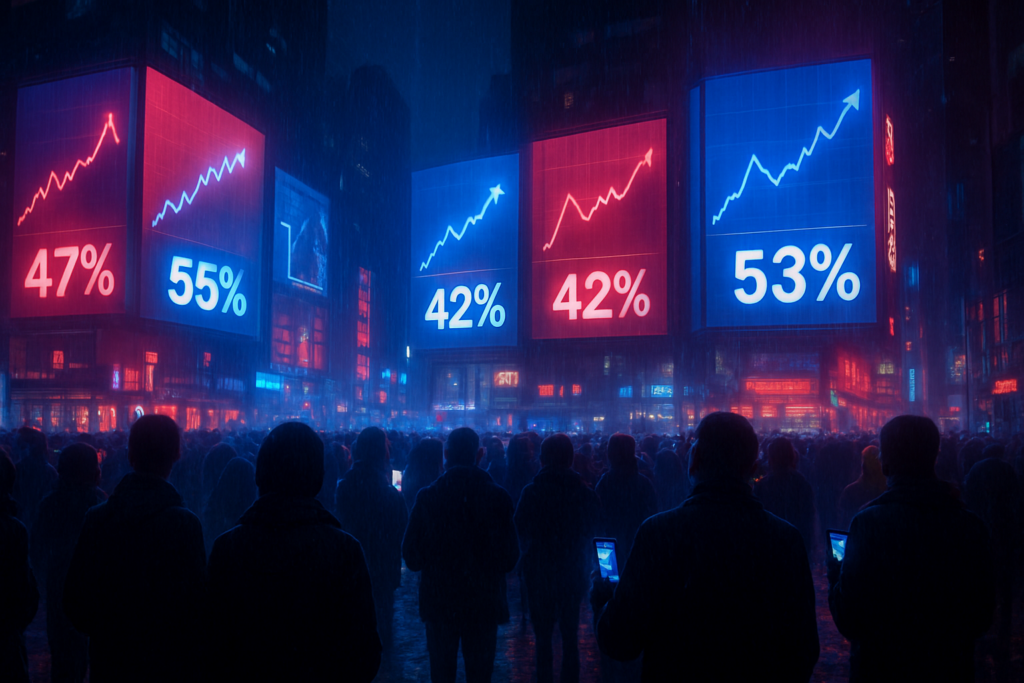
The most heated debate involved "victory ads" run by Kalshi. On the morning of Election Day, the platform ran digital billboards in Times Square and ads on Meta Platforms, Inc. (NASDAQ: META) and Alphabet Inc. (NASDAQ: GOOGL) properties that effectively "called" the race for Mamdani based on their 93% probability data. Critics, including the Cuomo campaign, argued that declaring a winner while people were still standing in line to vote was a dangerous new form of voter suppression.
Furthermore, the post-election "Deportation Market"—which allowed users to bet on the odds of the Ugandan-born, naturalized Mamdani being deported under a potential future federal administration—showed the darker side of these platforms. The existence of such a market drew condemnation from civil rights groups, highlighting the regulatory vacuum regarding "distasteful" or "unethical" contracts that nonetheless meet the technical criteria for being a predictable event.
What to Watch Next
As the Mamdani administration begins its first 100 days, the focus of prediction markets has shifted from "who will win" to "what will they do." Currently, active markets are tracking whether the new Mayor can successfully implement his promised citywide rent freeze by July 2026. Traders are currently pricing that outcome at a cautious 42% probability, reflecting skepticism over the legal hurdles in the State Legislature.
Another key milestone is the upcoming FY 2026 budget. With a projected $2 billion deficit, markets on the "NYC Credit Rating Downgrade" are seeing increased activity. Investors should also keep an eye on federal-city relations; contracts regarding federal funding cuts for "Sanctuary Cities" are already trading on Polymarket, with significant implications for Mamdani’s ambitious social programs.
Bottom Line
The 2025 NYC Mayoral race proved that prediction markets are no longer a niche hobby for economists; they are a potent political force. By accurately forecasting the "Mamdani Wave" long before it was reflected in mainstream media narratives, these markets provided a level of real-time insight that traditional methods failed to capture.
However, the controversy over campaign-led "odds ads" and the ethical questions surrounding sensitive contracts suggest that the industry is at a crossroads. While platforms like Kalshi and Polymarket offer a more efficient way to aggregate information, the "commodification of expectations" can have real-world consequences on voter turnout and political stability. As we look toward the 2028 presidential cycle, the lessons of New York City will serve as the primary case study for how—or if—prediction markets should be regulated in the heat of a democratic contest.
This article is for informational purposes only and does not constitute financial or betting advice. Prediction market participation may be subject to legal restrictions in your jurisdiction.
PredictStreet focuses on covering the latest developments in prediction markets.
Visit the PredictStreet website at https://www.predictstreet.ai/.