DENVER, Colorado - As independent jewelry makers increasingly move online, a structural challenge has become difficult to ignore: in a category where value is defined by taste, emotion, and craftsmanship, pricing rarely follows clear or standardized rules. Unlike mass-produced goods, handmade jewelry does not benefit from transparent benchmarks. Social engagement—likes, comments, and shares—may signal appreciation, but it seldom reflects how much a customer is truly willing to pay. As a result, many artisans find themselves underpricing their work, waiting through long decision cycles, or relying on instinct rather than evidence when setting prices.
When Taste Lacks a Price Signal
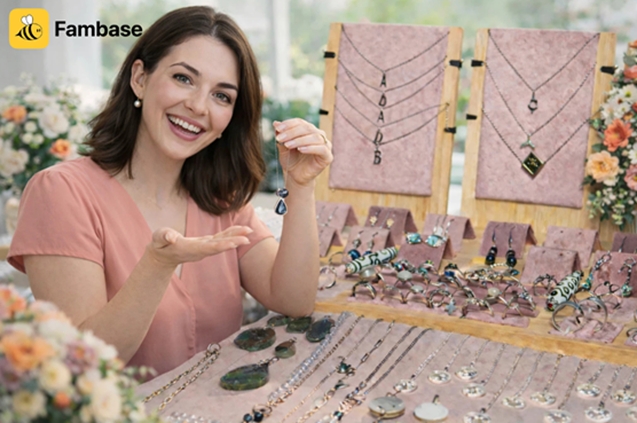
Olivia Harper, a Los Angeles–based handmade jewelry designer, has spent years building a small-batch practice focused on natural stones and visibly hand-finished details. While her designs consistently attracted attention online, translating that interest into predictable sales remained difficult.
“People would say my work was beautiful,” Harper said. “But I never knew what that meant in terms of value.”
Fixed pricing left her relying on constant guesswork. Higher prices slowed conversions, while lower prices raised concerns about undervaluation. Meanwhile, many interested buyers never returned to complete a purchase.
Discovering Value Through Private Auctions
Harper’s approach shifted after adoptingFambase as a private operating environment rather than a public sales channel. She created a closed community for customers familiar with her work and began hosting live auctions for select pieces.
Because auctions took place within a focused group of informed buyers, purchasing decisions accelerated. Hesitation diminished as participants saw others compete for the same piece, and final prices often exceeded Harper’s initial expectations.
Unlike public marketplaces, the private setting reduced external price comparisons and allowed buyers to act on personal preference rather than perceived market pressure.
“For the first time, I wasn’t guessing what my work was worth — I was watching people decide in real time,” Harper said.
Pre-Orders as Creative Validation
Alongside auctions, Harper introduced pre-orders to guide future designs. By presenting concepts before committing materials, she could identify which pieces customers were willing to wait for—turning preference into commitment and reducing creative risk.
Over time, customers became participants rather than passive buyers, helping shape which designs moved forward.
A Sustainable Model for Artisan Commerce
Today, Harper’s business relies less on bursts of visibility and more on sustained engagement within a defined community. Customers share how pieces are worn, influence one another’s decisions, and often arrive through referrals rather than advertising.
For artisans working in taste-driven categories, Fambase offers an alternative to static pricing and algorithmic exposure. By combining private communities with auctions and pre-orders, the platform enables value to emerge through participation—allowing creators to price their work based on understanding, not traffic.
About Fambase
Fambase is a community commerce platform built for independent sellers whose products depend on trust, context, and customer participation. Through private groups, live auctions, pre-orders, and integrated storefronts, Fambase helps creators align pricing, demand, and customer relationships within a single operating environment.
Learn more at joinfambase.com
Media Contact
Company Name: SocialSignal Lab
Contact Person: Julian Rowe
Email: Send Email
City: Denver
State: Colorado
Country: United States
Website: https://medium.com/@julianblogsite